Indeed, repairing an inflatable baffle is one of the most important tasks for any bounce house rental company; at the same time, it is also one of the most challenging maintenance projects you will face. Blown baffles occur in bounce houses, water slides, obstacle courses, mascot tunnels, football helmet tunnels, and inflatable football tunnels. At BounceHouseRepair.com, we help operators understand what a baffle is, how to inspect for a blown baffle, and how to repair or replace it correctly.
Blown baffles occur in bounce houses, water slides, obstacle courses, mascot tunnels, football helmet tunnels, and inflatable football tunnels. At BounceHouseRepair.com, we help operators understand what a baffle is, how to inspect for a blown baffle, and how to repair or replace it correctly.
What is a Baffle?
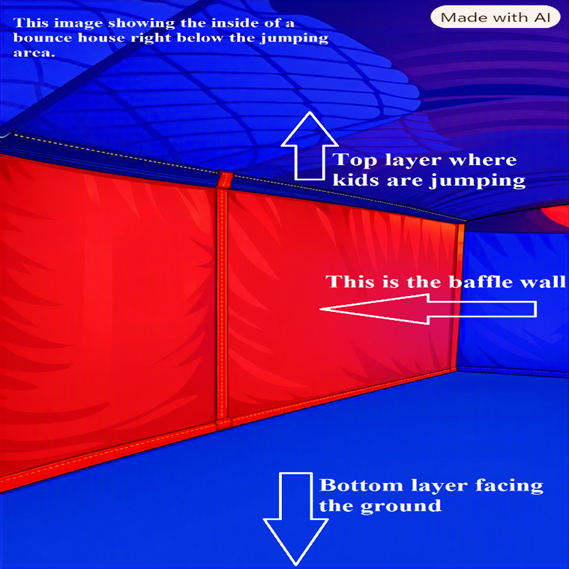
A baffle also known as an internal air wall or support panel is a hidden fabric wall inside an inflatable. It connects the top and bottom layers of the unit, creating controlled air chambers that distribute pressure evenly.
Without baffles, an inflatable would balloon, bulge, or collapse because the air would have nowhere to stabilize. Although you can’t see them from the outside, baffles are essential. They act as the internal support system that keeps the inflatable standing tall, firm, and safe for play.
What Does a Baffle Do?
This internal support prevents:
A baffle’s main job is to control airflow and stabilize the inflatable from the inside. By creating separate air chambers, baffles slow and redirect air movement so the unit maintains its proper shape during use.
This internal support prevents:
- Ballooning
- Sagging
- Uneven pressure
- Weak or unstable jumping areas
In short, the baffle is the internal stability system that supports every jump and landing.
What Causes a Baffle to Break? (Common Reasons for Blown Baffles)
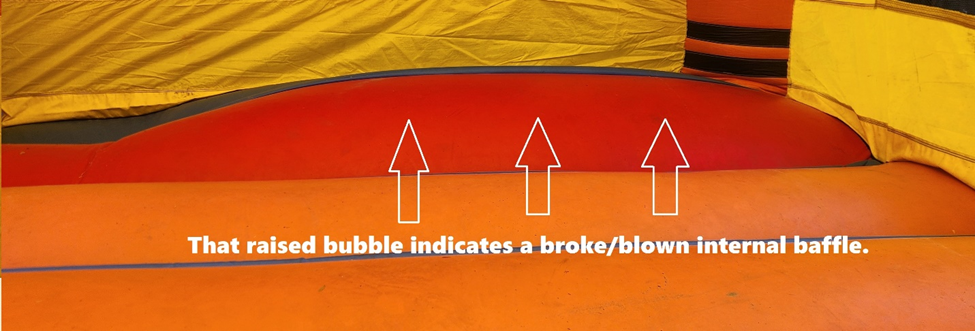
A “blown baffle” is one of the most common internal failures in inflatables. When a baffle breaks, it creates a bubble or hump on the surface and that is a clear evidence the internal wall is no longer holding pressure.
Here are the most common causes:
- Repeated High‑Impact Stress: Thousands of jumps transfer force into the internal walls. Over time, this weakens stitching and vinyl until seams tear.
- Stitching Fatigue: Baffles are stitched between the top and bottom layers. When stitches fray or loosen, the internal wall detaches.
- Material Wear & Aging: Vinyl stretches and loses strength with repeated rental cycles. Baffle material is thinner than the outer shell, so it wears out faster.
- Pressure Spikes & Overloading: Too many jumpers in one area, adult use, or heavy landings can overload a single baffle and rip the seam instantly.
- Manufacturing Weak Points: Low thread count, non‑commercial thread, or poor reinforcement can cause premature failure.
- Environmental Wear on Water Units: Water slides and wet/dry combos face UV exposure, moisture cycles, and friction that accelerate vinyl degradation.
What Happens After a Baffle Breaks?
Once a baffle detaches, air flows into a space that was never meant to inflate. This creates the visible bubble or raised area on the jumping surface.
If not repaired quickly:
- The bubble gets bigger
- Neighboring baffles begin to fail
- Pressure becomes uneven
- The unit becomes unsafe
- Repair costs increase
A blown baffle is a structural failure, not a cosmetic issue. It should be repaired immediately.
Blown Baffles in Inflatable Football Tunnels & Mascot Tunnels
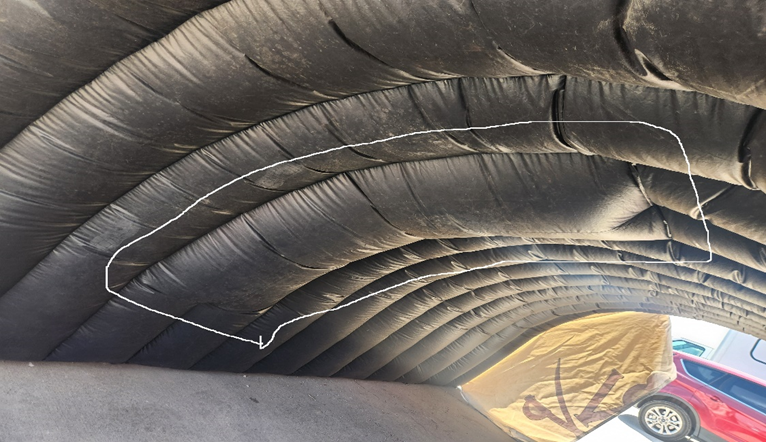
In fact, inflatable football tunnels, mascot tunnels, and football helmet tunnels use the same internal baffle system as bounce houses; however, because of their long, narrow shape, a blown baffle can cause even more dramatic distortion.
These units experience:
- Heavy stress from repeated inflations
- Outdoor exposure
- Game‑day handling
- Oversized blowers that create unnecessary internal pressure
Because football tunnels have long baffle chambers, repairs require precise alignment, reinforced stitching, and commercial‑grade materials. At BounceHouseRepair.com, we specialize in inflatable football tunnel repairs to ensure they look sharp, stand tall, and perform safely on game day.
How to Repair a Blown Baffle (Step‑by‑Step)
- Inflate and locate the Bubble – Start Here
- Identify where the baffle has failed before opening the inflatable.
- Fully inflate the unit
- Look for bubbles, humps, or uneven pressure areas
- Mark the affected location for inspection
- Identify where the baffle has failed before opening the inflatable.
- Open the Inflatable
- Access the internal structure to inspect the damaged baffle.
- Open the zipper or access panel
- Carefully enter the inflatable interior
- Follow the marked location to find the failed baffle
- Access the internal structure to inspect the damaged baffle.
- Diagnose the Failure
- Determine whether the issue is stitching failure or a torn baffle wall.
- Check if stitching has separated
- Inspect the baffle panel for tears or thinning
- Identify all weak points around the attachment area
- Determine whether the issue is stitching failure or a torn baffle wall.
- Repair Weak Stitching – Recommended
- Re-stitching restores the connection between layers
- Use commercial-grade thread
- Reinforce the seam with additional stitching
- Ensure alignment between top and bottom layers
- Re-stitching restores the connection between layers
- Replace Torn Baffle Walls – Structural Repair
- A torn baffle requires full replacement for long-term stability.
- Cut out the damaged baffle panel
- Install new commercial-grade vinyl
- Reinforce attachment points with heavy-duty stitching
- A torn baffle requires full replacement for long-term stability.
- Test the Repair
- Ensure the inflatable holds proper shape and pressure after repair
- Inflate the unit fully
- Check for even pressure distribution
- Confirm the bubble is gone and the area is stable
- Ensure the inflatable holds proper shape and pressure after repair
Why Professional Repair Matters
A blown baffle requires the right materials, tools, and techniques. Using weak vinyl, the wrong thread, or improper stitching will cause the seam to fail again—often faster than before.
Professional repair ensures:
- Correct reattachment of the internal wall
- Proper reinforcement and alignment
- Commercial‑grade vinyl and heavy‑duty thread
- Long‑lasting structural stability
- Safe performance for customers
Quality repair protects your investment and extends the life of your inflatable.
Conclusion: Keep Your Inflatable Safe, Stable, and Rental‑Ready
Inspecting and repairing inflatable baffles is essential for maintaining safe, reliable inflatables. Because baffles act as the internal support system, even a small failure can quickly become a major structural issue.
By understanding what a baffle is, recognizing the early signs of a blown baffle, and relying on professional repair, operators can prevent costly downtime and extend the life of their equipment.
At BounceHouseRepair.com, we provide dependable solutions for minor seam issues and full baffle replacements. If you notice uneven inflation or suspect a blown baffle, take action quickly. Protect your investment, keep your customers safe, and ensure your inflatables perform the way they were designed to.