Common inflatable repairs are an important part of maintaining commercial bounce houses, water slides, obstacle courses, and other inflatable attractions. Commercial inflatables are built for repeated use, but even well-maintained bounce houses, water slides, obstacle courses, sports inflatables, and inflatable tunnels can develop damage over time.
A small tear, failing seam, or damaged anchor point can lead to lost rental time, canceled events, and more expensive repairs if the problem is ignored. Knowing what to look for can help inflatable owners recognize problems early and determine when professional repair is needed.
At Bounce House Repair, we understand that commercial inflatables are valuable equipment. This guide covers the most common inflatable repairs, why damage occurs, and how professional technicians approach different types of repairs.
Important safety reminder: Remove an inflatable from service if you discover structural damage, a failed anchor point, damaged safety netting, significant air loss, or another condition that could affect safe operation. Follow the manufacturer’s instructions for inspection, setup, anchoring, maintenance, and repairs.
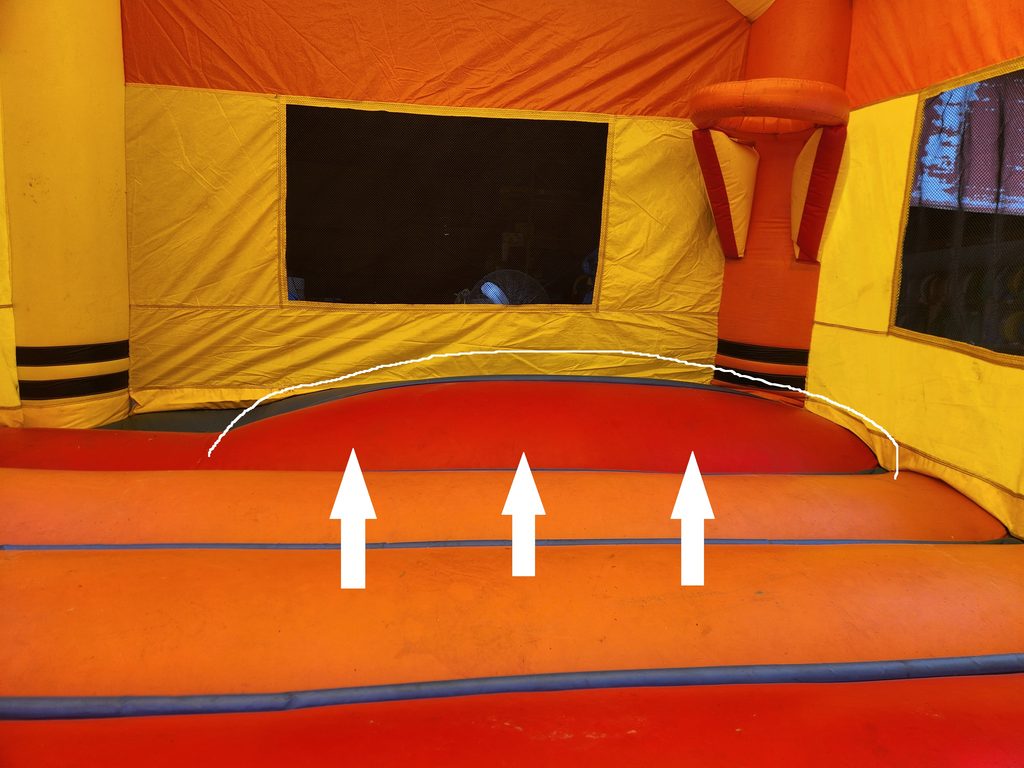
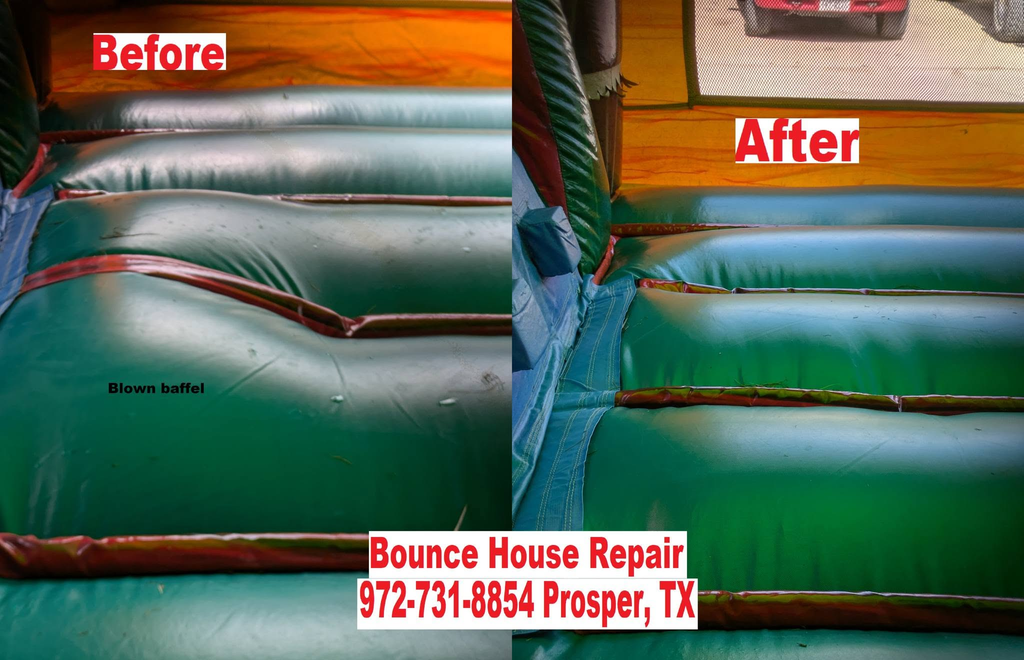
1. Blown Baffles and Internal Inflatable Damage
A baffle is an internal panel that helps an inflatable maintain its intended shape and distribute air pressure. When a baffle or its attachment fails, the inflatable may develop unusual bulges, distorted surfaces, or areas that no longer hold their shape properly.
Common warning signs include:
- A large bubble or raised area in the bouncing floor, wall, or slide.
- A change in the inflatable’s normal shape.
- An area that appears unstable or unusually soft.
- Distortion that becomes noticeable when the unit is inflated.
- A section that looks normal when deflated but changes shape during inflation.
Baffle damage can develop from repeated use, stress on internal attachments, aging materials, or other underlying structural problems.
How professionals repair blown baffles
A professional repair may require access to the inside of the inflatable to locate the damaged baffle and inspect its attachment points. Depending on the condition, the technician may need to repair the attachment, reinforce the affected area, or replace damaged material.
A simple surface patch usually will not correct a problem inside the inflatable. The underlying structural damage needs to be identified and addressed.
If you suspect a blown baffle, stop using the unit until it has been properly inspected. Otherwise, continued use could cause additional damage to your inflatable. Professional technicians assess common inflatable repairs carefully to determine the appropriate repair method for the damage.
Video: https://www.youtube.com/shorts/JdX1-EXtsfo?feature=share
2. Seam Separation and Blown Seams
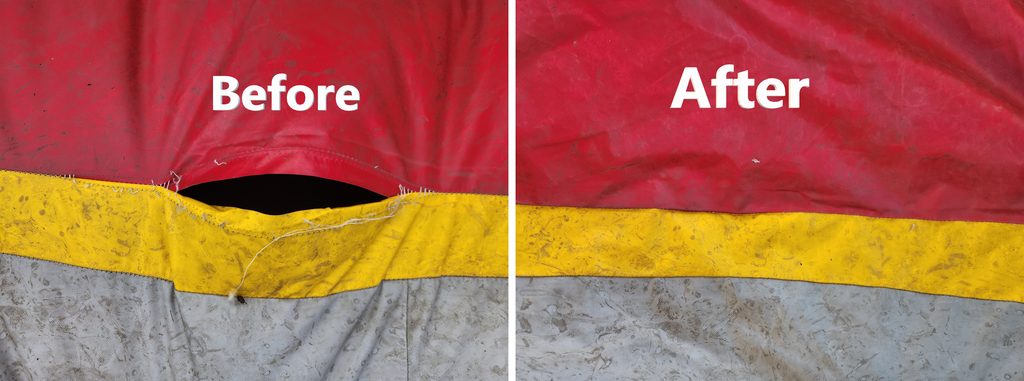
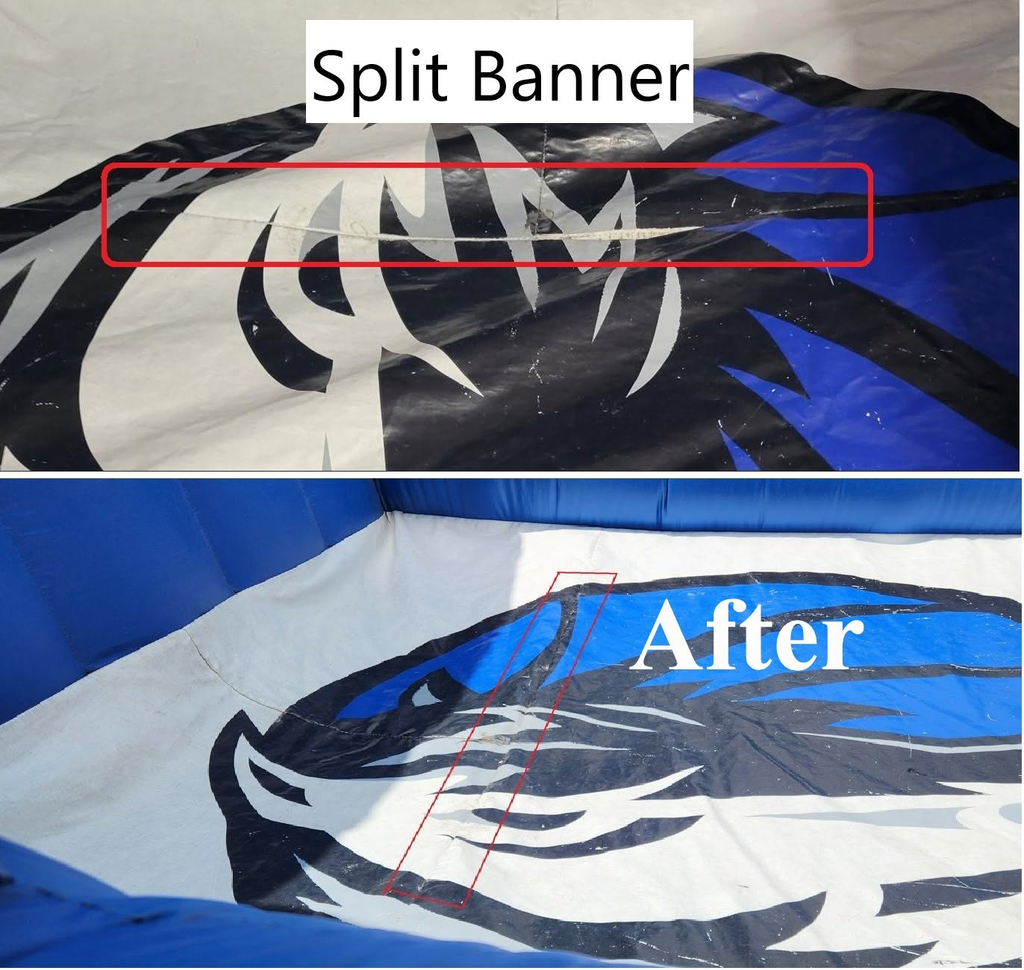
Seams connect the panels that form an inflatable. Over time, stitching can weaken, vinyl can deteriorate, and stress can cause the panels to separate.
Signs of seam damage include visible openings, loose or broken thread, gaps along a panel connection, and air escaping from an area that previously held air properly.
Common causes include:
- Frequent setup, folding, transportation, and storage.
- Repeated stress on high-use areas.
- Aging thread or weakened vinyl.
- Improper inflation or operation outside manufacturer specifications.
- Moisture exposure or inadequate drying and storage.
- Existing damage that continues to spread under pressure.
Even a small opening can become a larger problem when the inflatable is repeatedly inflated and used.
How professionals repair torn seams
A professional technician first examines the seam and the surrounding material to determine why it failed. The repair may involve removing failed stitching, realigning the panels, re-stitching the seam with appropriate commercial-grade thread, and reinforcing the area when necessary.
If the vinyl around the seam is brittle, thin, or badly worn, stitching alone may not provide a durable repair. The damaged material may also need reinforcement or replacement.
Addressing seam separation early can help prevent additional damage and unnecessary downtime. Addressing common inflatable repairs promptly can help reduce downtime for your rental business.
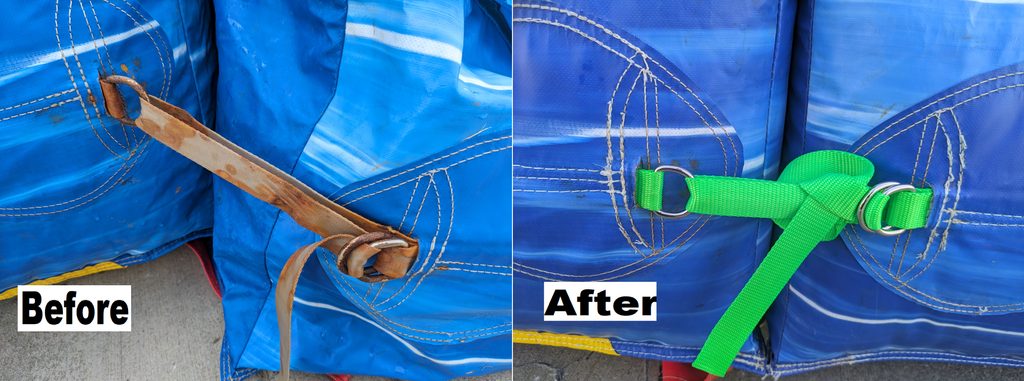
3. Anchor-Point and D-Ring Repairs
Anchor points are critical components of a commercial inflatable. They connect the unit to the stakes, weights, or other anchoring system specified by the manufacturer.
These attachment points experience significant stress during operation. Damage to an anchor point can affect the inflatable’s ability to remain secured as intended.
Look for warning signs such as:
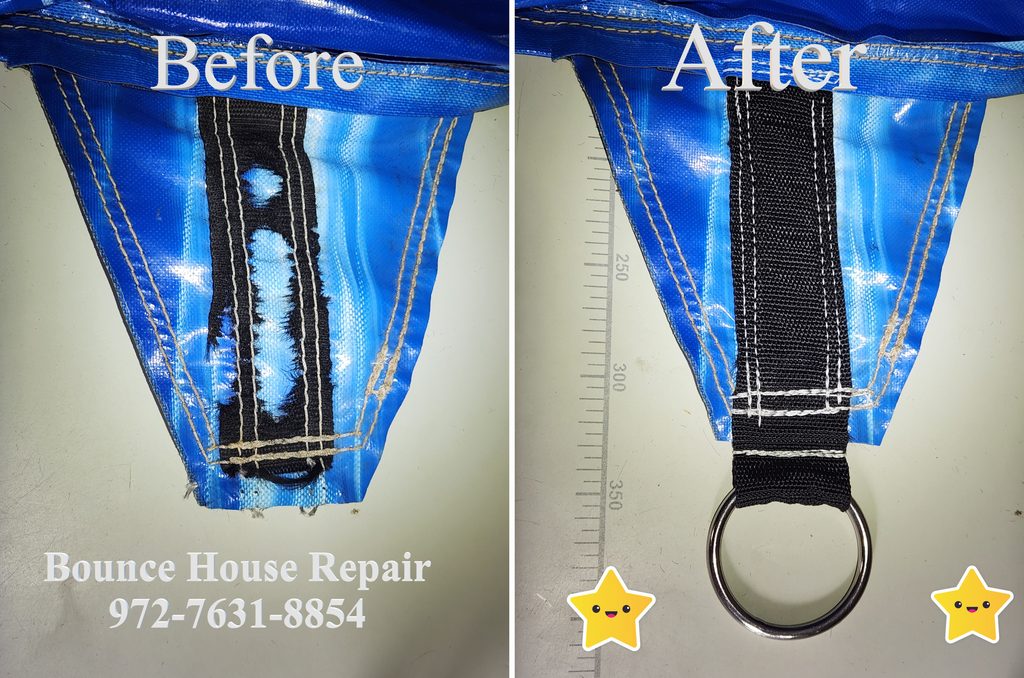
- Torn vinyl surrounding a D-ring.
- Frayed or damaged webbing.
- Loose or separated stitching.
- An anchor strap pulling away from the unit.
- Bent, damaged, or corroded hardware.
How professionals repair anchor points
Depending on the damage, a professional repair may involve replacing the D-ring or webbing, repairing or replacing the surrounding vinyl, adding appropriate reinforcement, and restoring the attachment using suitable industrial sewing and repair methods.
The goal is to address the damaged attachment and its surrounding structure, not merely cover the visible tear.
Never assume a damaged anchor point is safe because it still appears attached. Remove the inflatable from service until the damage has been evaluated and properly repaired.
Always use the number and locations of tie-downs specified by the manufacturer. Do not substitute non-load-bearing loops for designated anchor points.
4. Mesh and Safety-Netting Repairs
Safety netting helps define play areas, improve visibility, and reduce the likelihood of riders leaving designated areas. Mesh can become damaged through repeated use, abrasion, rough handling, transportation, or stress where it attaches to the inflatable.
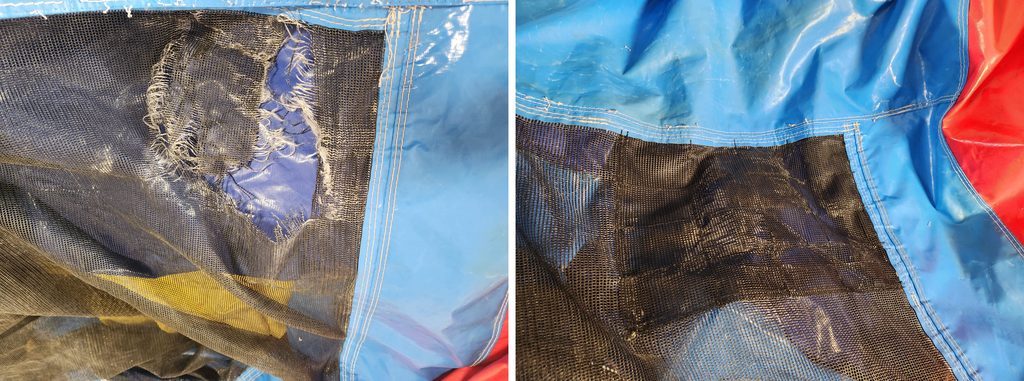
Common problems include small holes, long tears, loose attachment points, frayed edges, and weakened mesh panels.
Even a small opening can grow quickly during use, particularly in busy bounce areas and obstacle courses.
How professionals repair damaged mesh
A technician evaluates the size and location of the tear, the condition of the surrounding mesh, and the strength of its attachment points.
A small, isolated tear may be repairable. Larger tears, widespread deterioration, or damage near important attachment areas may require replacing part or all of the panel.
The replacement material and repair method must be suitable for the equipment and its intended use. Damaged safety netting should not be ignored or covered with an improvised fix.
5. Water-Slide Repairs
Commercial inflatable water slides face different wear conditions from dry-use bounce houses. Sun exposure, water, friction, cleaning, and repeated drying can affect the vinyl, stitching, hardware, and other components.
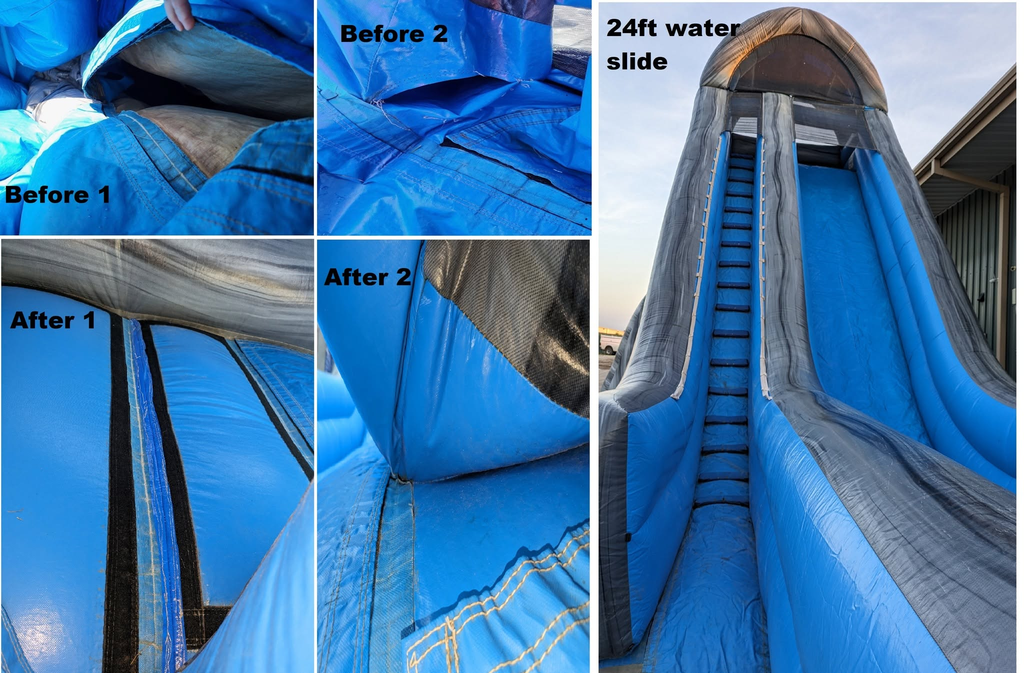
The top platform is one area that deserves particular attention. Repeated climbing, sitting, and shifting can place stress on the vinyl and seams around the platform and climbing area.
Common water-slide problems
- Torn or separating seams around the top platform.
- Worn or damaged slide surfaces and liners.
- Vinyl punctures and air leaks.
- Damaged buckles or corroded hardware.
- Zippers that stick, separate, or fail to close.
- Worn hook-and-loop fasteners.
- Damage around climbing steps, splash areas, pools, or blower tubes.
How professionals repair water slides
The appropriate repair depends on the affected component and the condition of the surrounding material.
A damaged platform may require access to the interior, removal of deteriorated vinyl, installation of suitable replacement material, and reinforcement appropriate for the high-use area. Other repairs may involve replacing worn liners, repairing seams, or replacing damaged hardware and fasteners.
If deterioration is widespread, replacing the affected section or the entire unit may be a better long-term option than repeatedly repairing individual problems.
Adding another blower is not a substitute for diagnosing an inflatable that is losing air. The cause of the air loss must be identified before the unit returns to service.
After repairs, follow the manufacturer’s instructions for cleaning, drying, storage, and inspection.
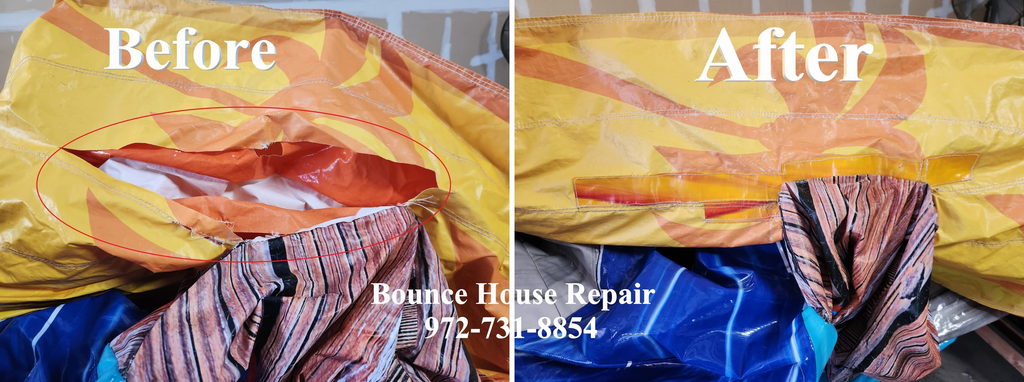
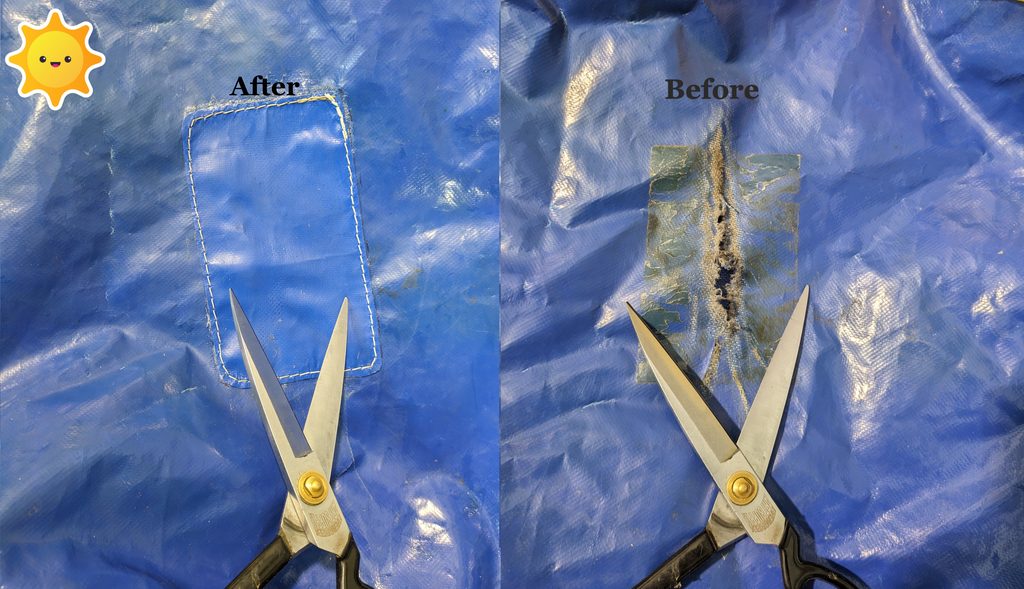
6. Vinyl Patches, Holes, and Punctures
Small holes and punctures are among the most common problems with frequently used rental inflatables. They can occur during transportation, setup, storage, cleaning, or contact with sharp objects.
Damage may begin as a small pinhole or short tear. Repeated inflation and folding can cause the affected area to expand, especially when the surrounding vinyl is already worn.
How professionals repair vinyl damage
A professional repair starts with cleaning and inspecting the affected area. The technician evaluates the size of the hole, the condition of the surrounding vinyl, and whether the damage affects a seam or structural component.
Depending on the findings, the repair may require a suitable vinyl patch, reinforcement, stitching, or replacement of a larger section.
Commercial inflatable repairs should use materials and methods compatible with the unit. Simply covering a hole without addressing weakened surrounding material may lead to another failure.
Have a small tear or puncture? Early inspection can help determine whether a localized repair is practical or whether more extensive work is needed.
Video: How to patch an inflatable: https://www.youtube.com/shorts/q1jwnQvP_wU?feature=share
7. Zippers, Blower Tubes, Straps, and Hardware
Not every inflatable repair involves a large tear. Smaller components can wear out or fail, affecting inflation, setup, storage, or normal operation.
Common issues include:
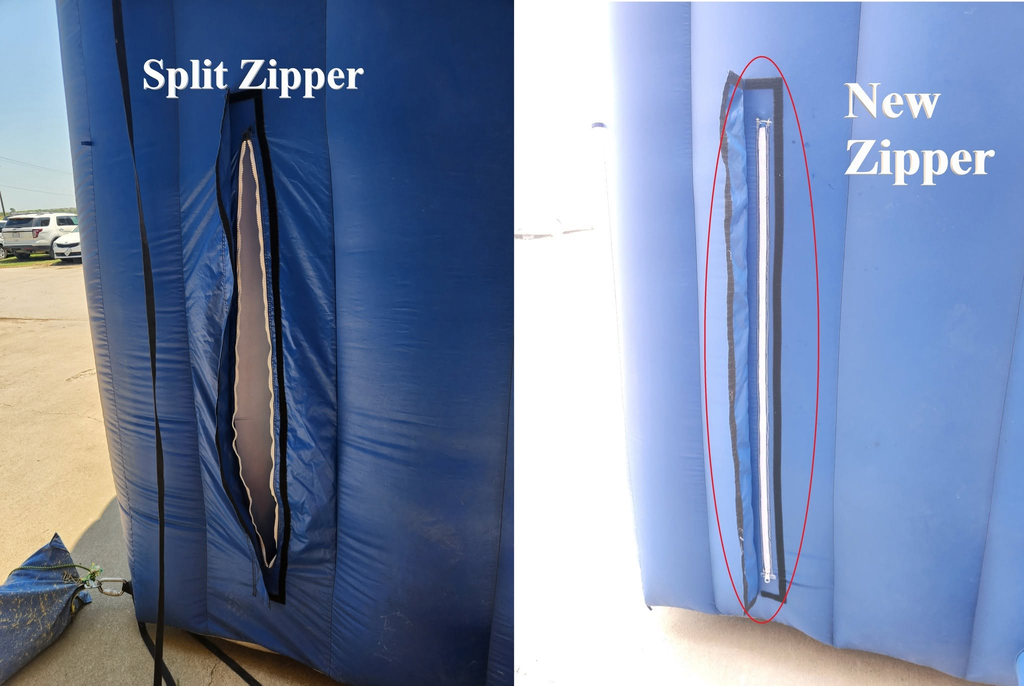
- Zippers that stick, separate, or no longer close securely.
- Torn or detached blower tubes.
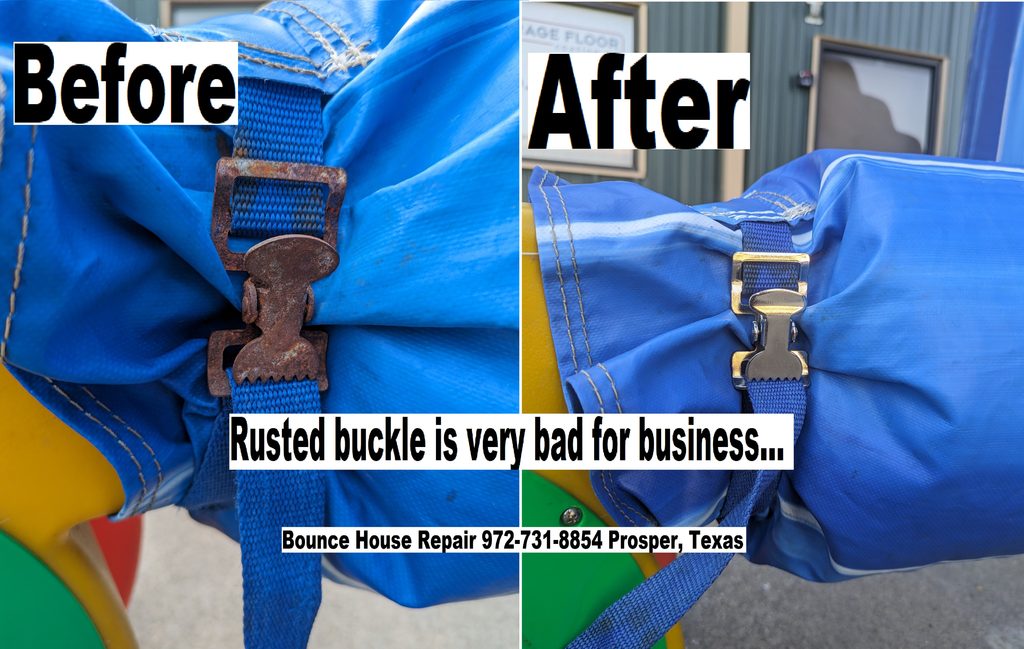
- Broken buckles and damaged straps.
- Worn hook-and-loop fasteners.
- Damaged attachment points.
- Corroded hardware on equipment exposed to water.
These components may seem minor, but they can serve important functions. A damaged blower tube, for example, can affect airflow, while a failed closure or strap can interfere with proper operation.
How professionals repair inflatable components
A technician inspects the failed component and determines whether it can be repaired or should be replaced. The work may involve replacing a zipper, repairing or replacing a blower tube, installing suitable hardware, or restoring a strap or fastening system.
The correct solution depends on the component’s function, the extent of the damage, and the manufacturer’s requirements.
If the problem affects airflow, structural integrity, anchoring, or safe operation, remove the inflatable from service until it has been evaluated.
When Should You Call a Professional Inflatable Repair Company?
Some routine cleaning and basic maintenance tasks can be performed by owners who follow the manufacturer’s instructions. Structural damage and failures involving critical components require more careful evaluation.
Consider professional repair assistance when you find:
- Suspected blown baffles or damaged internal walls.
- Large tears or damage that continues to spread.
- Separating seams or repeated air leaks.
- Damaged anchor points, D-rings, webbing, or tie-down areas.
- Torn safety netting or damaged attachment points.
- Water-slide platform, liner, climbing-step, or pool damage.
- Repeated problems that return after a previous repair.
- Brittle, thin, or extensively worn vinyl.
- Damage to inflatable tunnels, sports inflatables, or custom-branded units.
Reparability depends on the type of damage, the equipment’s condition, and the manufacturer’s requirements. When deterioration is extensive, replacement may be more practical than another repair.
Always follow the instructions supplied with your specific inflatable and applicable safety requirements.
Recognizing common inflatable repairs early can help you address damage before it leads to more costly problems or extended downtime.
How to Help Your Inflatables Last Longer
Regular inspection and good maintenance practices can help identify problems before they become more extensive.
Consider making these steps part of your routine:
- Inspect before use. Check seams, vinyl, mesh, anchor points, zippers, blower tubes, and other important components.
- Check after use. Look for new tears, loose stitching, damaged hardware, and signs of unusual wear.
- Clean and dry properly. Follow the manufacturer’s instructions to help prevent moisture-related deterioration.
- Store carefully. Use the recommended folding and storage procedures and avoid unnecessary abrasion or contact with sharp objects.
- Address damage promptly. Remove damaged equipment from service and arrange an appropriate inspection and repair.
- Keep maintenance records. Document damage, repairs, inspections, and recurring problems so you can monitor the condition of your equipment.
Preventive maintenance cannot eliminate every failure, but it can help you recognize problems earlier and make better decisions about repairs and replacement. Regular inspections can help you identify common inflatable repairs before minor damage becomes a bigger problem.
Commercial Inflatable Repair Services from Bounce House Repair
Common inflatable problems include blown baffles, seam separation, damaged anchor points, torn mesh, water-slide wear, vinyl punctures, and failing components. Identifying damage early can help reduce downtime and protect the value of your equipment.
Bounce House Repair works with a variety of commercial inflatables, including bounce houses, water slides, obstacle courses, sports inflatables, branded event inflatables, and inflatable tunnels.
If your inflatable needs attention, start by documenting the damage. Send clear photos of the affected area, a wider photo showing where the damage is located, and approximate measurements of the damaged section.
These details can help us review the problem and determine the next steps.
Need help with a damaged inflatable? Contact Bounce House Repair to discuss your repair needs and request an estimate.